
The Bodhisatta as a Scholar
The Bodhisatta as a Scholar
In the hallowed halls of an ancient monastery, nestled amidst serene, rolling hills, resided a brilliant scholar named Vasudeva. His mind was a vast ocean of knowledge, his understanding of the scriptures profound, and his compassion for all beings boundless. He was, in essence, the Bodhisatta, his every action guided by the aspiration to alleviate suffering. The atmosphere of the monastery was one of tranquil contemplation, the air filled with the gentle murmur of prayers and the scent of ancient manuscripts.
However, a dark shadow fell upon the land. A terrible plague, swift and merciless, swept through the villages surrounding the monastery, leaving a trail of death and despair. The people, their bodies wracked with fever and their spirits broken, had nowhere to turn. The serene atmosphere of the region was shattered, replaced by the agonizing cries of the afflicted and the desolate silence of loss.
Vasudeva, witnessing this devastation from his sanctuary, felt his heart ache with an unbearable sorrow. He knew that his knowledge, his understanding of medicinal herbs and ancient healing practices, could be of service. But the monastery, a place of retreat and study, was far removed from the suffering. The atmosphere within the monastery walls, usually one of calm study, was now tinged with the distant sounds of the unfolding tragedy.
He approached the Abbot, a venerable monk whose wisdom was as deep as Vasudeva's own. "Revered Abbot," Vasudeva began, his voice filled with earnestness, "the people outside are dying. My knowledge of healing may be of some use. I wish to leave the sanctuary of the monastery and tend to the sick." The Abbot, though understanding of Vasudeva's compassionate impulse, was hesitant. "My son," the Abbot replied, his voice gentle but firm, "the plague is dangerous. You risk your own life. Here, within these walls, you can continue your studies and contribute to the Dharma in other ways." The atmosphere between the two wise men was one of deep respect, yet also of a profound difference in their immediate paths.
Vasudeva, however, was resolute. "Revered Abbot," he said, his eyes shining with unwavering conviction, "what use is knowledge if it does not serve to alleviate suffering? My purpose is to help those in need, and if that means risking my own life, then so be it." The Abbot, seeing the depth of Vasudeva's compassion, finally relented. "Go then, my son, and may the blessings of the Buddha guide your path. Be cautious, and remember the teachings of compassion." The atmosphere shifted, a sense of solemn purpose settling upon Vasudeva as he prepared to depart.
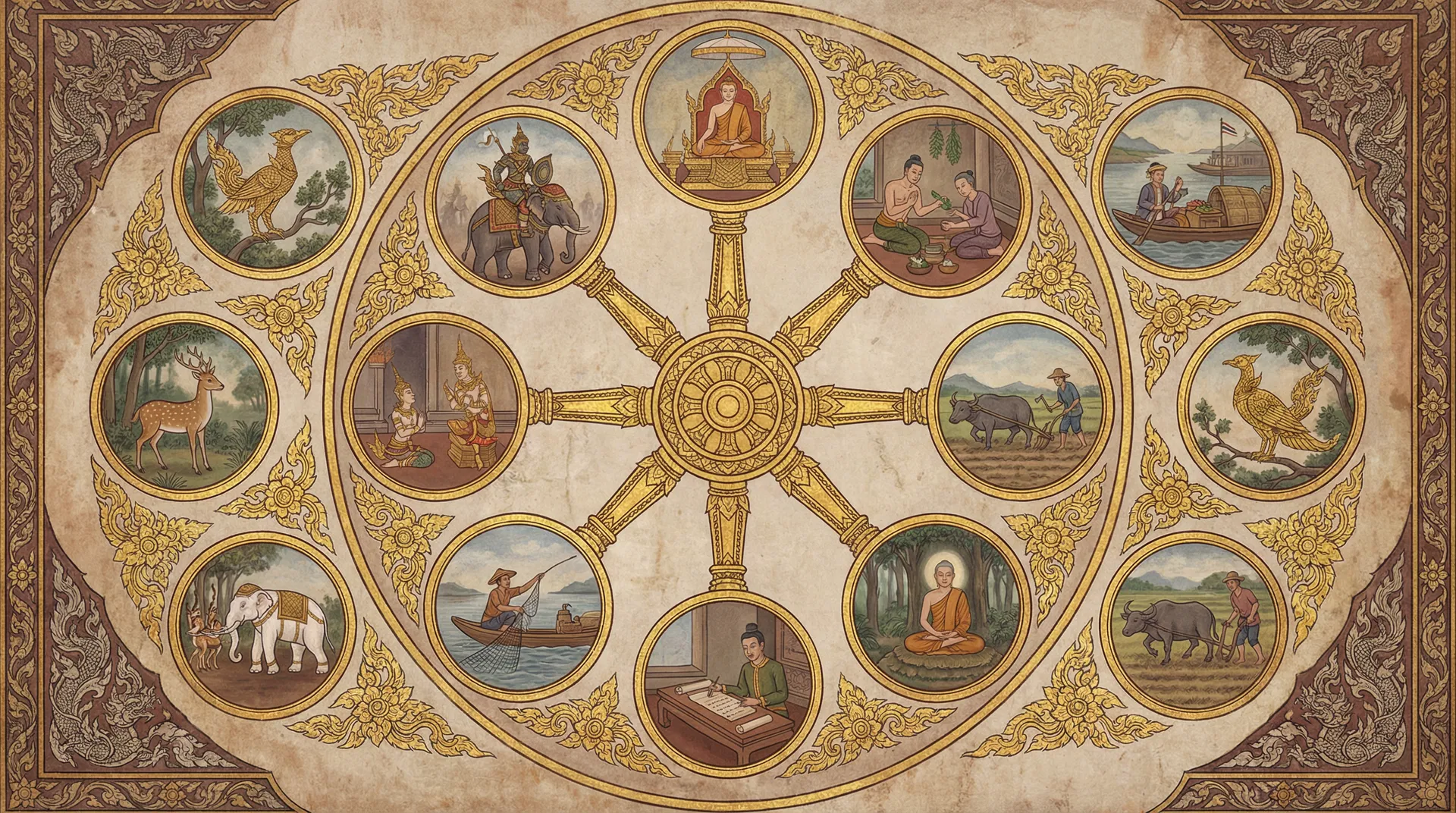
He gathered the finest medicinal herbs from the monastery's garden, prepared potent remedies, and, with a heavy heart but a determined spirit, ventured out into the plague-stricken villages. The journey was fraught with peril. The air itself seemed to carry the contagion, and the sight of the dying and the dead was a constant, harrowing reminder of the danger. Yet, Vasudeva pressed on, his scholarly knowledge transforming into a powerful tool of healing and hope.
He worked tirelessly, moving from village to village, his hands stained with herbs, his clothes carrying the scent of sickness. He brewed countless remedies, comforted the dying, and nursed the sick back to health, often going without sleep or food himself. He would often say to the villagers, his voice filled with gentle reassurance, "Have faith. Though the times are dark, compassion and knowledge can overcome even the greatest of adversities." The atmosphere of the villages, once filled with despair, began to lighten, a glimmer of hope returning with each person he healed.
His selfless dedication did not go unnoticed. The people, who had initially feared the plague, began to see Vasudeva as a beacon of salvation. They brought him what little they had, their gratitude overflowing. Vasudeva, in turn, accepted their offerings with humility, sharing what he had with everyone. He never sought reward or recognition, his sole motivation being the alleviation of suffering. The atmosphere, though still touched by the ravages of the plague, was now infused with a profound sense of gratitude and respect for the selfless scholar.
The plague eventually subsided, its fury spent, and the land began to heal. Vasudeva, though weakened by his ordeal, returned to the monastery, his heart filled with the quiet satisfaction of having served. The Abbot greeted him with tears of joy and pride. "You have shown us, Vasudeva," the Abbot said, "that true scholarship lies not in the accumulation of knowledge, but in its application for the benefit of all beings. You have embodied the highest ideals of the Dharma." The moral of this tale is that true wisdom is demonstrated through the compassionate application of knowledge for the well-being of others, even at personal risk. The perfection practiced was Wisdom, a profound understanding coupled with compassionate action.
— In-Article Ad —
💡Moral of the Story
True wisdom is demonstrated through the compassionate application of knowledge for the well-being of others.
Perfection: Wisdom
— Ad Space (728x90) —
More Jataka Tales You May Enjoy
 457Ekādasanipāta
Dhamma-pāla Jātaka
Dhamma-pāla JātakaIn the celestial realm, where clouds of spun gold drifted across an endless sapphi...
💡 True strength lies in compassion, forgiveness, and adherence to righteousness, even in the face of adversity and betrayal.
42EkanipātaThe Bodhisatta as the Golden Deer
The Bodhisatta as the Golden DeerIn the ancient kingdom of Mithila, nestled beside a shimmering, eme...
💡 Unwavering truthfulness and selfless compassion can overcome even the direst of circumstances, leading to prosperity for all.
122EkanipātaKusa Jataka
Kusa Jataka Long ago, in the land of Mithila, reigned a king named Okkaka, a ruler whose reign was m...
💡 Suffering and adversity, when faced with courage and perseverance, can forge inner strength and lead to true enlightenment and righteous leadership.
86EkanipātaThe Great Vanga Jataka
Once upon a time, in the glorious city of Savatthi, while the Supreme Buddha resided at Jetavana Mon...
💡 True compassion lies in the willingness to sacrifice one's own well-being for the benefit of others, and such selfless acts can bring about miraculous positive change.
75EkanipātaThe Tale of Subahu the White Fox
In ages past, when the Bodhisatta was yet a bodhisatta, he was born as a white fox of immaculate fur...
💡 True wisdom lies in sharing and compassion, recognizing that collective well-being is the greatest wealth.
58EkanipātaThe Great Ocean Jataka
In a land of bountiful shores, where the vast sea met fertile lands, there lay a small fishing villa...
💡 True wealth is found in generosity and compassion, not in material possessions. Greed blinds the mind and leads to self-destruction.
— Multiplex Ad —